Posts

DGUF Conference 2015 - Is the public creating a different archaeology? Analyses of a power shift. (Tübingen, 14-17th May)

Image
By Chiara Zuanni (University of Manchester) Last month I had the opportunity to participate in the annual conference of the DGUF (Deutsche Gesellschaft für Ur- und Frühgeschichte e.V. – German Association for Pre- and Protohistory). This year’s theme focused on public archaeology and aimed to explore the possibilities and consequences of public involvement with the past. During the two days which comprised the academic programme, many different aspects of community archaeology, citizen science, and archaeological communication projects were explored. On Friday, Sylvia Crumbach unpacked the relationship between re-enactment groups and textile archaeologists: she argued that while both develop a great expertise in ancient clothing, it remains to be understood how museum reconstruction and images affect re-enactment costumes, and vice versa. The controversies raised by public approaches to archaeological work were highlighted in the afternoon, by two papers discussing metal detec...

Giveaway alert!

Image
To celebrate 1 year since publishing our first Special Volume, we will draw one lucky winner who will receive paper versions of Vol. 4 and Special Volume 1.  Wherever you live in the world, participate by simply liking and sharing the post on our Facebook page until Sunday, 14 June!  Good luck!

Seminari a l’entorn dels valors del patrimoni i l’interacció amb el públic en l’arqueologia [Seminar on heritage values and public interaction in archaeology]

Image
Within the framework of a workshop for the “ Heritage Values ” project, the GAPP (Heritage and PublicArchaeology Group) at University of Barcelona organized an intense seminar about public interaction in archaeology. Intense, because we had the opportunity to share and debate projects and ideas with nearly 20 colleagues in one day, which started for me at 5 am to take the train from Madrid to Barcelona. The seminar consisted of three parts: sustainability and participation in heritage policy; cultural tourism and new technologies; and the role of public archaeology as a participation tool. The outcomes of the seminar will be published soon, so I will not make a traditional review of the different papers presented, but rather a general comment on the topics debated and will share some thoughts about them. Image: Seminar poster and programme (source: Universitat de Barcelona ) How do we interact with the public as professionals? How does the public interact with arc...

Meet the team: Alejandra Galmés

Image
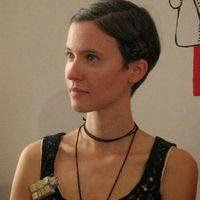
Alejandra Galmés is from Mallorca (Balearic Islands). She received her BA in History at the University of the Balearic Islands in 2013 and completed her MA in Prehistoric Archaeology at the Complutense University of Madrid in 2014 with a final dissertation entitled “Visibility and perception in the construction of a prehistoric landscape. The case of Calvià (Mallorca, Balearic Islands)” . She is currently a PhD candidate at the Complutense University of Madrid. Alejandra is interested in Landscape Archaeology, Island and Mediterranean Archaeology and, of course, Public Archaeology. She has conducted activities at the University of the Balearic Islands to engage teenagers and children in Archaeology. Living in Mallorca, an island with a rich cultural heritage but mostly known for its pubs and discos, makes her very aware of the importance of making science and heritage more public. 

Meet the team: Kaitlyn Goss

Image
Kaitlyn Goss is an AmeriCorps – LocalHistory Corps Member who is stationed at the Oberlin Heritage Center in Oberlin, Ohio. She helps the Oberlin Heritage Center and other historical organizations in the region develop history programs and recruit volunteers. Kaitlyn hails from Dayton and graduated from Wright State University. She has a bachelor’s and master’s degree in anthropology and public history. Native American history has always interested her and she has assisted her professor Dr. Robert Riordan in supervising excavations at the Fort Ancient State Memorial in Ohio. 

Meet the team: Alexandra Ion

Image
Alexandra is an archaeologist and osteoarchaeologist, interested in the anthropology of the body, theoretical and public archaeology. Her research focuses on the construction of scientific knowledge in Archaeology and Osteoarchaeology, the relevance of these disciplines in the contemporary world and the value ascribed to the human body in this process. Alexandra is currently a research assistant at the Institute of Anthropology "Francisc I. Rainer" (Romania) and a postdoctoral researcher at the University of Bucharest. The two research projects she is currently focused on explore the construction of the anthropological body in the beginnings of the Romanian physical anthropology (the collection, fragmentation and representation of the human body) and the role of medieval princes’ bodies in contemporary archaeological narratives (how the bodies are turned into a political matter). When she is not working on these projects or doing her reviews editor job for the journal, yo...

‘Card game: How the citizens of Athens experience the city’s cultural heritage during the crisis’. Reflections on values-based management

Image
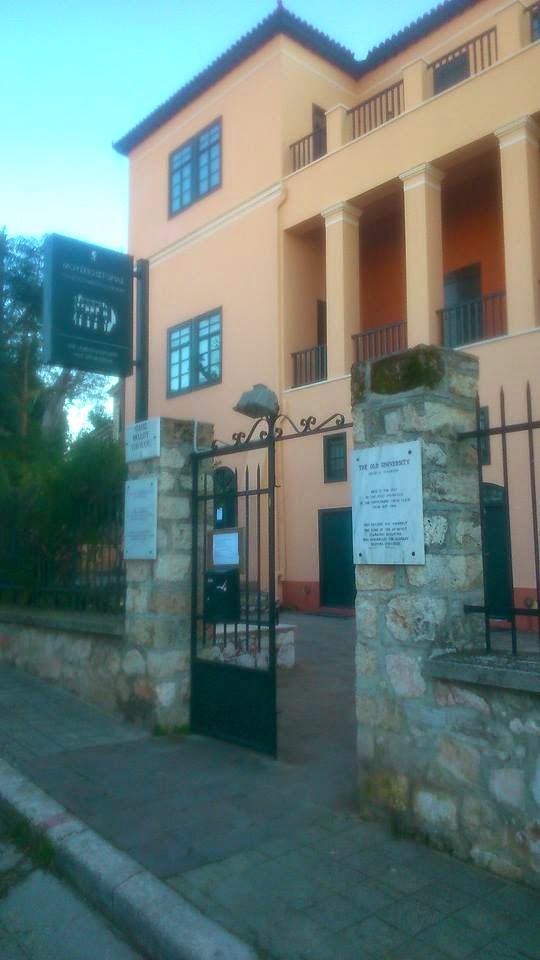
Introduction The ‘Card game: How the citizens of Athens experience the city’s cultural heritage during the crisis’ was held at the Athens University Museum , Athens, Greece,  on 10 January 2015, within the framework of ‘ Archaeological Dialogues ’ initiative . Citizens of Athens of differing backgrounds, both archaeological and non-archaeological ones, participated as players in the game - specifically: archaeology, archaeology-museology, pedagogics, law, and computer engineering. The players (as well as the attendees) were selected through an open call-invitation via social media. The game was moderated by Ioannis Poulios and Elena Papagiannopoulou. Image: The Athens University Museum (photo by Elena Papagiannopoulou) Aims, and methodology The aim of the game was threefold: a) to study how the citizens of Athens (of differing backgrounds, i.e. archaeological and non-archaeological) are connected in their daily lives to the city’s cultural heritage durin...