Posts

Showing posts with the label Greece

‘Card game: How the citizens of Athens experience the city’s cultural heritage during the crisis’. Reflections on values-based management
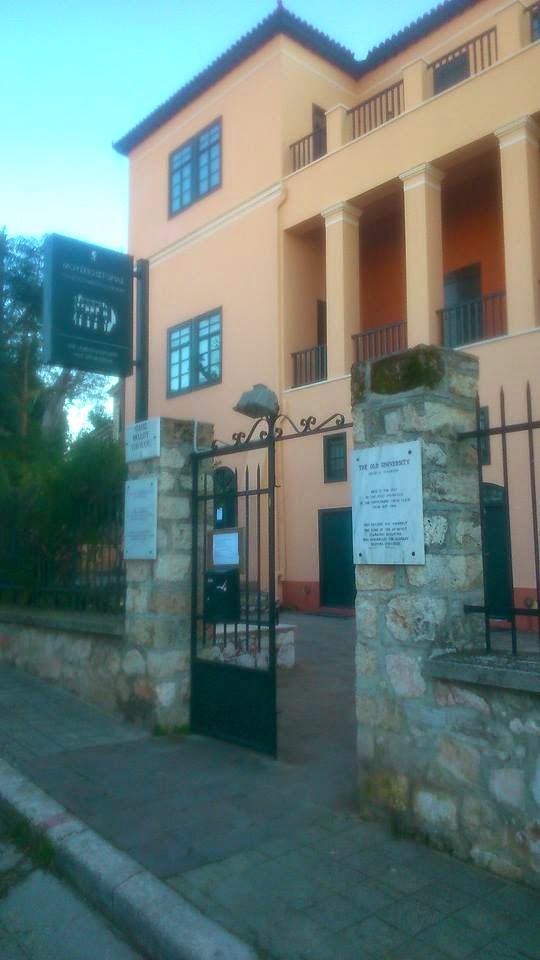
Image
Introduction The ‘Card game: How the citizens of Athens experience the city’s cultural heritage during the crisis’ was held at the Athens University Museum , Athens, Greece,  on 10 January 2015, within the framework of ‘ Archaeological Dialogues ’ initiative . Citizens of Athens of differing backgrounds, both archaeological and non-archaeological ones, participated as players in the game - specifically: archaeology, archaeology-museology, pedagogics, law, and computer engineering. The players (as well as the attendees) were selected through an open call-invitation via social media. The game was moderated by Ioannis Poulios and Elena Papagiannopoulou. Image: The Athens University Museum (photo by Elena Papagiannopoulou) Aims, and methodology The aim of the game was threefold: a) to study how the citizens of Athens (of differing backgrounds, i.e. archaeological and non-archaeological) are connected in their daily lives to the city’s cultural heritage durin...

When Public Archaeology is conflated with Cultural Tourism

The Stavros Niarchos Foundation (SNF) hosted on 26-27 June 2014 an International Conference on Philanthropy in collaboration with the European Foundation Centre , with vivid discussions as to how the crippling unemployment rates among young people can be remedied by creating new opportunities (please see programme here ). I watched the session on Cultural Tourism because I was interested to see what suggestions the speakers would offer, since this was under the general theme of “Recharging the Youth: Youth Unemployment and Initiatives to Create New Opportunities for the Young”. Given the fact that the Ministry of Tourism as well as the general press have been presenting Cultural Tourism as a panacea for the current economic crisis because of its enormous undeveloped potential, any views offered on this are of great interest. But what one can hear and see in the short presentations is actually the concerned voices of a panel of archaeologists as experts on - why not? - cul...

A 30-year retrospect of the Greek Ministry of Culture educational programmes: an insider's insight

The presentation of Stathis Gotsis on February 25, 2014 at the Association of Greek Archaeologists offered us an earnest account and insight of the Greek experience and efforts to make museums more inclusive and open to society. A history graduate himself and an employee of the Greek Ministry of Culture and its Centre of Educational Programmes since 1991, S. Gotsis joined the Byzantine and Christian Museum in 2000 as the head of Educational Programmes. It is worth noticing that the B&C Museum has been a pioneer in educational programmes nationwide for many years. However, S. Gotsis had already been involved in educational programmes since 1985, when the very first project of the Ministry on ‘the History of Writing’ was launched. In his presentation he talked about four different projects: one with a group of secondary education students between the age of 13 and 15, who worked on a project in Gazi, an old and closed down industrial complex of natural gas; a project with a g...