Posts

Showing posts with the label heritage management

Heritage magistra vitae - The 3rd International HerMa Conferece in Elefsina, Greece

Image
By Faidon Moudopoulos The 3rd IHC International Conference in Heritage Management (HerMa) took place in Elefsina, Attica, Greece, from the 30 th of September to the 2 nd of October. Organized by the Institute for Heritage Conservation , an NGO aiming to promote good practices in heritage management, the event was more than a conference, being part of the Aeschylea Festival , organized by the Municipality of Elefsina. The coexistence of the Festival with the conference combined with the fact that the city’s candidateship for European Cultural Capital of 2021 nomination was successful, transformed those three days to an inundation of diversified heritage practices. The old olive factory with the conference logo (credit: Sophia Zakoura) All those parameters provided a fertile ground for the development of the conference. Moreover, the broad topics covered by the various panels stimulated the interest of professionals in various disciplines and resulted to a diverse a...

Review: Best Practices in World Heritage

Image
Review of the II International Conference on Best Practices in World Heritage: People and Communities (Mahón, April-May 2015) by Nekbet Corpas Cívicos Group photo of  the Conference  assistants  in the venue Some weeks after the 2nd International Conference on Best Practices in World Heritage , it is time to take stock. This second edition, which focused on People and Communities, would not have been possible without substantial development in research and continuous effort. Excitement and accumulated experience were essential for the Complutense University of Madrid’s research team of which the Conference’s directors, Alicia Castillo and Ángeles Querol, are part. Once again, Menorca’s Council supported the event in its search for support to the Talayotic Menorca’s nomination to UNESCO World Heritage. The topic of this second edition, held in Mahon (Menorca, Balearic Islands) from the 29th of March to the 2nd of April 2015, perfectly ref...

Seminari a l’entorn dels valors del patrimoni i l’interacció amb el públic en l’arqueologia [Seminar on heritage values and public interaction in archaeology]

Image
Within the framework of a workshop for the “ Heritage Values ” project, the GAPP (Heritage and PublicArchaeology Group) at University of Barcelona organized an intense seminar about public interaction in archaeology. Intense, because we had the opportunity to share and debate projects and ideas with nearly 20 colleagues in one day, which started for me at 5 am to take the train from Madrid to Barcelona. The seminar consisted of three parts: sustainability and participation in heritage policy; cultural tourism and new technologies; and the role of public archaeology as a participation tool. The outcomes of the seminar will be published soon, so I will not make a traditional review of the different papers presented, but rather a general comment on the topics debated and will share some thoughts about them. Image: Seminar poster and programme (source: Universitat de Barcelona ) How do we interact with the public as professionals? How does the public interact with arc...

‘Card game: How the citizens of Athens experience the city’s cultural heritage during the crisis’. Reflections on values-based management

Image
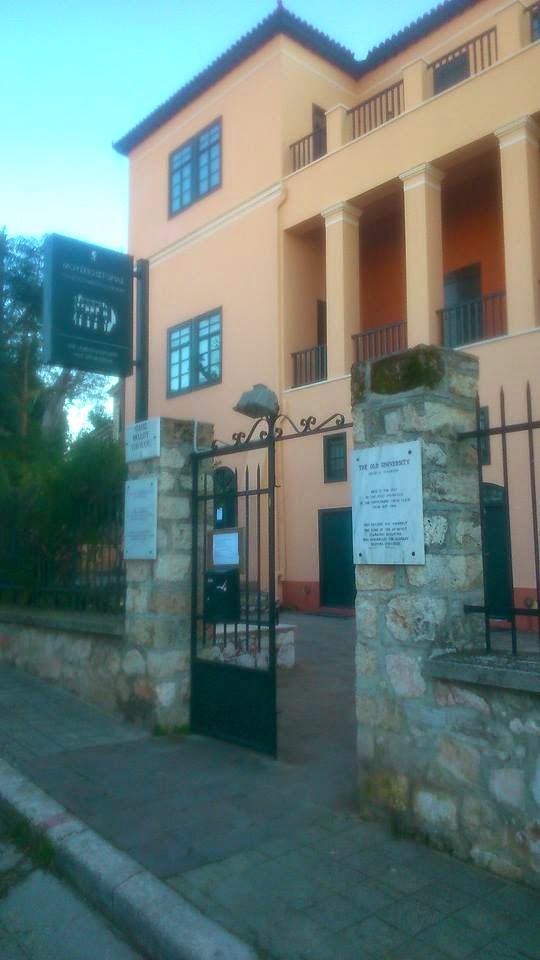
Introduction The ‘Card game: How the citizens of Athens experience the city’s cultural heritage during the crisis’ was held at the Athens University Museum , Athens, Greece,  on 10 January 2015, within the framework of ‘ Archaeological Dialogues ’ initiative . Citizens of Athens of differing backgrounds, both archaeological and non-archaeological ones, participated as players in the game - specifically: archaeology, archaeology-museology, pedagogics, law, and computer engineering. The players (as well as the attendees) were selected through an open call-invitation via social media. The game was moderated by Ioannis Poulios and Elena Papagiannopoulou. Image: The Athens University Museum (photo by Elena Papagiannopoulou) Aims, and methodology The aim of the game was threefold: a) to study how the citizens of Athens (of differing backgrounds, i.e. archaeological and non-archaeological) are connected in their daily lives to the city’s cultural heritage durin...