Posts

Showing posts with the label AP Journal

Volume 9 - Editorial: Transition
Image
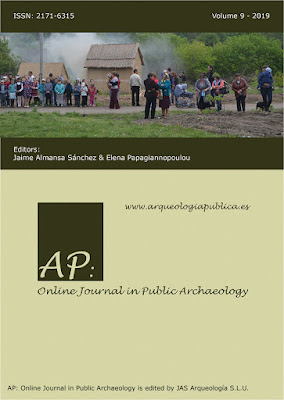
EDITORIAL Transition Jaime ALMANSA SÁNCHEZ, Editor Elena PAPAGIANNOPOULOU, Editor Easter 2020. Being in quarantine in our respective homes due to the COVID-19 pandemic crisis, it was time to move things forward and come out of this confinement with a belated volume 9. As this editorial is being drafted during the COVID-19 outbreak, our hope in the current climate of uncertainty is that you, your loved ones, and your community are safe.  During this past year much has changed. As far as the journal is concerned, apart from dealing with the current crisis, this past year has been quite challenging and could be described as a year of transition. Unfortunately,  with this volume we say goodbye to two treasured members of the team: Amanda Erickson Harvey and Alexandra Ion. Both have provided their great services to the journal for many years, having served as an Assistant Editor and Reviews Editor respectively, and felt that it was now time to move on. Need...

Volume 6 is out!

Image
We are very happy to announce the publication of AP: Online Journal in Public Archaeology  Volume 6 !  Migration to   Open Journal Systems  took some extra work and time but  w e hope you will like the new platform and enjoy the new volume! Yours, The editorial team Editors Jaime Almansa Sánchez , JAS Arqueología S.L.U., Spain Elena Papagiannopoulou , Independent Researcher, Greece Assistant Editors Amanda Harvey , NASA, United States Kaitlyn T. Goss , Americorps, United States Reviews Editor Alexandra Ion , McDonald Institute for Archaeological Research, University of Cambridge and Institute of Anthropology "Francisc I. Rainer" of the Romanian Academy, United Kingdom Assistant Production Editor Alejandra Galmés , Universitat de les Illes Balears, Spain

Heritage magistra vitae - The 3rd International HerMa Conferece in Elefsina, Greece

Image
By Faidon Moudopoulos The 3rd IHC International Conference in Heritage Management (HerMa) took place in Elefsina, Attica, Greece, from the 30 th of September to the 2 nd of October. Organized by the Institute for Heritage Conservation , an NGO aiming to promote good practices in heritage management, the event was more than a conference, being part of the Aeschylea Festival , organized by the Municipality of Elefsina. The coexistence of the Festival with the conference combined with the fact that the city’s candidateship for European Cultural Capital of 2021 nomination was successful, transformed those three days to an inundation of diversified heritage practices. The old olive factory with the conference logo (credit: Sophia Zakoura) All those parameters provided a fertile ground for the development of the conference. Moreover, the broad topics covered by the various panels stimulated the interest of professionals in various disciplines and resulted to a diverse a...

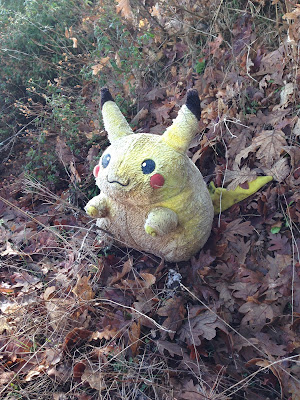
Pikachu, the vandal

Image
by Daniel García Raso Would you abandon him now? Until very recently, Nintendo, one of the giants of video games, had refused flatly (quite incomprehensibly from a business point of view) to create games for smartphones and other mobile devices, or even to allow their classic games (Mario, Donkey Kong or sagas like Metroid) to be available on these platforms. But at a meeting of senior executives, someone had to bring Tatsumi Kimishima to reason because Miitomo , the first smartphone app of the Japanese company, was released on March 17 with terrific success: in less than a month it got 4 million downloads. In less than a month since its launch on July 7, Pokémon Go surpassed platforms like Twitter in terms of user numbers. Thanks to the fetishist momentum of casual gamers, some must be gloating in Tokyo... even recovering from the ‘bump’ of Wii U, until they stated a mere 32% of stocks in Niantic , the actual company that released the app.  Pokémon Go is not only t...

Evaluating our journal

Image
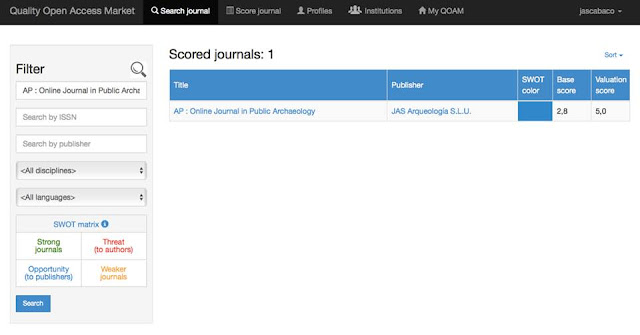
This year's   editorial   had a lot to do with the future of the archaeology publishing world – a future that looks bleak – and an Open Access model that should confront neoliberal trends in academic publishing. It might sound strange coming from a journal sponsored by a company, but we believe our ethical stand on this matter is crystal clear. One of the issues we need to address now is the quality of the journal. There are certain things we are not willing to change. For instance, we believe that a large academic Editorial Board, which has little or no involvement in the real daily affairs of the journal, would not change anything for the better. However, there clearly is room for improvement and we ask you to help us in this effort. Radboud University Nijmegen has launched " Quality Open Access Market " (QOAM) to evaluate Open Access journals in a collaborative way. We want to use this tool in order to improve the journal, so we will not ask y...

Editorial: Consolidating the model

As we are about to bid farewell to 2015, we must admit that this past year has been interesting regarding the academic publishing sector. In September 2014 we presented a poster at the EAA Meeting in Istanbul to celebrate our journal’s first five years. One of the points highlighted in our poster was our commitment to provide a completely free service to both authors and readers. This academic publishing model is by no means innovative. It has been established in Spanish archaeology since 1998 with ArqueoWeb and, during the past few years, most institutional journals have been uploaded under the OJS (Open Journal Systems) platform. In the case of public institutions, Open Access is understood as part of their academic responsibilities and its standard costs are incorporated in the general budget for publications. In our case, JAS Arqueología S.L.U. supports the small material costs of the journal, while our team works voluntarily for the project. Then, is AP Journal a loss-mak...

Giveaway alert!

Image
To celebrate 1 year since publishing our first Special Volume, we will draw one lucky winner who will receive paper versions of Vol. 4 and Special Volume 1.  Wherever you live in the world, participate by simply liking and sharing the post on our Facebook page until Sunday, 14 June!  Good luck!

Meet the team: Alejandra Galmés

Image
Alejandra Galmés is from Mallorca (Balearic Islands). She received her BA in History at the University of the Balearic Islands in 2013 and completed her MA in Prehistoric Archaeology at the Complutense University of Madrid in 2014 with a final dissertation entitled “Visibility and perception in the construction of a prehistoric landscape. The case of Calvià (Mallorca, Balearic Islands)” . She is currently a PhD candidate at the Complutense University of Madrid. Alejandra is interested in Landscape Archaeology, Island and Mediterranean Archaeology and, of course, Public Archaeology. She has conducted activities at the University of the Balearic Islands to engage teenagers and children in Archaeology. Living in Mallorca, an island with a rich cultural heritage but mostly known for its pubs and discos, makes her very aware of the importance of making science and heritage more public. 

Meet the team: Kaitlyn Goss

Image
Kaitlyn Goss is an AmeriCorps – LocalHistory Corps Member who is stationed at the Oberlin Heritage Center in Oberlin, Ohio. She helps the Oberlin Heritage Center and other historical organizations in the region develop history programs and recruit volunteers. Kaitlyn hails from Dayton and graduated from Wright State University. She has a bachelor’s and master’s degree in anthropology and public history. Native American history has always interested her and she has assisted her professor Dr. Robert Riordan in supervising excavations at the Fort Ancient State Memorial in Ohio. 

Meet the team: Alexandra Ion

Image
Alexandra is an archaeologist and osteoarchaeologist, interested in the anthropology of the body, theoretical and public archaeology. Her research focuses on the construction of scientific knowledge in Archaeology and Osteoarchaeology, the relevance of these disciplines in the contemporary world and the value ascribed to the human body in this process. Alexandra is currently a research assistant at the Institute of Anthropology "Francisc I. Rainer" (Romania) and a postdoctoral researcher at the University of Bucharest. The two research projects she is currently focused on explore the construction of the anthropological body in the beginnings of the Romanian physical anthropology (the collection, fragmentation and representation of the human body) and the role of medieval princes’ bodies in contemporary archaeological narratives (how the bodies are turned into a political matter). When she is not working on these projects or doing her reviews editor job for the journal, yo...

Meet the team: Amanda CE Harvey, MA, RPA

Image
Education: Amanda received her Bachelor of Science from the University of Florida in anthropology in 2006. She completed her Master of Arts in public archaeology, focusing on outreach and education for museums and archaeological sites, at University College London in 2008. Amanda is currently enrolled in the Educator Preparation Institute at Santa Fe College to receive her teaching licensure. Experience: Amanda began working in archaeology with the Florida Museum in the Historical Archaeology Department. During this time, she completed field schools in St. Augustine, Florida and Muro Lecesse, Italy with the University of Florida. Before and after graduate school, Amanda gained experience working in cultural resource management throughout the U.S. and museums abroad, and has since returned to the Florida Museum to work with the public in informal science education. Currently, Amanda is an Education Coordinator at NASA's Goddard Space Flight Center focusing on bringing inform...